
PlanVortex vs Zernio: one writes the posts, the other does not
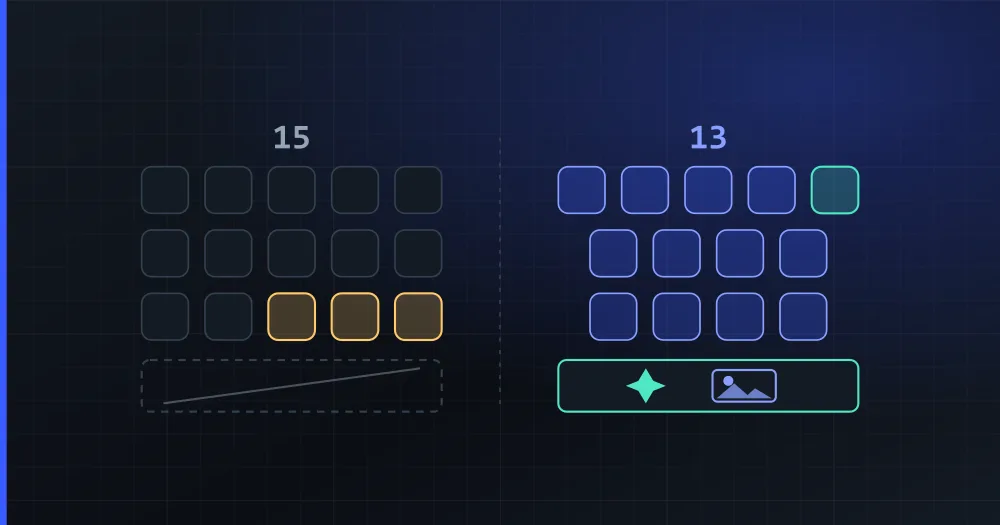
PlanVortex writes the posts — the copy and the images — and Zernio has no AI of any kind. Zernio covers 16 platforms and 7 ad networks against PlanVortex's 13 networks, sells SMS and voice on top, and its API is free for the first two connected accounts; PlanVortex is cheaper on the accounts line from five accounts up. Those two sentences are the whole comparison; the rest is detail.
Both are REST APIs for publishing to social networks from inside your own product, both ship an MCP server, and both are run by Spanish teams. They are the closest thing each other has to a direct competitor, so this page starts with the one thing that really separates them — who provides the content — and goes straight on to where Zernio wins, which is nearly everything else.
Which of the two writes the posts?
PlanVortex. Zernio has no AI of any kind — not text, not images, not a single mention across their site, their pricing or their documentation as of September 2, 2026.
This is the largest functional difference between the two products and the axis of this comparison, and it points in the opposite direction from the network count: it is the only box on this whole page that cannot be closed by hiring more people, because it is not one more integration but another product inside the same one. Zernio's positioning is explicitly developer-first and agent-first: the headline sells the API and the MCP server to AI agents. But the content still has to arrive from somewhere, and with Zernio that somewhere is your side of the integration.
In PlanVortex the AI is the product's own:
| PlanVortex | Zernio | |
|---|---|---|
| Generate post text | Yes, from €15/month | No |
| Generate images | Yes | No |
| Plan a week from a theme | Yes, with templates | No |
| Write from your own photos | Yes | No |
| Bring your own provider key | Yes, consumes no credits | Not applicable |
The planner takes a theme, a set of your own photos, a pasted article or your real product catalog and produces a week of posts per network, with suggested times and human review before anything goes out. Credits are €1.50 per 1,000 — an image is about 70 credits, a typical weekly plan about 617 — and they come inside the plan: 1,000 on basic, 4,000 on pro. If you would rather pay your own provider, bring your own key and no credits are consumed at all.
What does Zernio do better than PlanVortex?
Four things, and none of them is a matter of opinion.
More networks. Their homepage claims 16 platforms and lists 15 by name: Instagram, TikTok, YouTube, X, LinkedIn, Facebook, Threads, Pinterest, Reddit, Bluesky, WhatsApp, Telegram, Discord, Snapchat and Google Business. PlanVortex covers 13, and all of them but one are also on Zernio, so the gap is exact: Pinterest, Reddit and Snapchat on their side, Slack on ours. Theirs are on PlanVortex's roadmap, and a roadmap is not an endpoint; ours is a team channel rather than an audience, so it is worth one box in a table and not a headline.
Paid advertising. Zernio runs campaigns on 7 ad networks — Meta, Google, TikTok, LinkedIn, Pinterest, X and Reddit ads — from the same API. PlanVortex publishes organic content and nothing else, and that is a deliberate decision rather than a gap waiting to close: seven ad integrations carry their own permission cycles, and organic publishing is not finished across 16 networks yet.
Telephony. Phone numbers from $3/month, SMS from $0.008 per segment, voice from $0.01/minute. If what you are building sends a WhatsApp message with an SMS fallback, that is one vendor with Zernio and two without.
A team of eight against a team of one. Zernio is eight people in Girona, bootstrapped, formerly getlate.dev. Shipping speed is not comparable and it would be silly to pretend otherwise.
There is a fifth item, smaller but real: their rate limits scale with the accounts you pay for — 60 requests/minute below three accounts, 600 up to two thousand, 1,200 above — and their documentation states them plainly, network by network, including the daily publishing caps.
How much does each one cost?
Zernio's prices verified at zernio.com/pricing on September 2, 2026; PlanVortex's against its production code and its live Stripe tariff on September 3, 2026. Dollars converted at 0.92 EUR/USD.
Both charge in graduated tiers, which is the same shape: each account pays the rate of its own band, so one more account never triggers a jump to a whole new plan.
| Accounts | PlanVortex | Zernio |
|---|---|---|
| 2 | €0 (free) | $0 → €0 |
| 3 | €0 (free) | $6 → €5.52 |
| 4 | €15 (basic) | $12 → €11.04 |
| 6 | €15 (basic) | $24 → €22.08 |
| 10 | €30 (pro) | $48 → €44.16 |
| 20 | €60 | $78 → €71.76 |
| 50 | €125 | $168 → €154.56 |
| 100 | €225 | $318 → €292.56 |
| 500 | €585 | $718 → €660.56 |
Read that table honestly and it says three things.
PlanVortex's free plan is wider: three accounts against two, both with no card, unlimited posts and the API included. Zernio wins one band, around four accounts, where their $12 beats PlanVortex's €15 flat plan. And from five accounts upward PlanVortex is cheaper, by roughly a third through the middle of the table and by eleven percent at five hundred accounts.
The caveat that makes this comparison fair
That table is now the whole bill, and until 04-09-2026 it was not. The Custom plan used to carry three more lines — integrations, AI credits and X credits — adding €28.50/month of minimums on top of the accounts line, even though the Pro plan already included those same three things inside its €30. At twenty accounts that flipped a row: €88.50 real against about €72 on Zernio.
Those minimums are gone. The Custom plan includes 5 integrations, 4,000 AI credits and 5,000 X credits, starts at €45 with 15 accounts and 20 GB, and everything above that is accounts. So the figures above are what gets charged: €60 at twenty accounts against €71.76, and €125 at fifty against €154.56.
Two things Zernio bills separately, in the other direction: messages beyond 10,000/month at $1 per 10,000, and X/Twitter at cost pass-through, from $0.005 per read to $0.200 per post with a link. PlanVortex passes X through as credits and does not meter conversations at all.
Can both be used behind my own interface?
Yes, both, and this is where a wedge PlanVortex used to claim does not exist.
Zernio's multi-tenancy is built on profiles: one per end customer of the integrator. Accounts are connected with GET /api/v1/connect/{platform}?profileId=...&redirect_url=..., and they document two modes — their hosted picker, or, in their own words, "For a fully white-label experience (your UI, no Zernio-hosted selection screens), use headless mode." API keys are scoped per profile, can be read-only, and expire in days.
PlanVortex does the same thing with a temporal token and connect_links, and the integrator draws every screen. On this specific point the two are tied.
Where they are not tied is one step later. Zernio has a dashboard for the developer — keys, calendar, logs — but no product-grade panel for your end customer. PlanVortex ships one, in three languages, with the calendar, the composer, the inbox, comments and stats, and it can be served under your brand. If you are integrating publishing into a CRM and your clients are going to want a screen, with Zernio you build that screen.
Developer tooling, side by side
| PlanVortex | Zernio | |
|---|---|---|
| REST API on every plan | Yes | Yes |
| MCP server | Yes, in the official registry | Yes, hosted, 280+ tools |
| Node.js library | Yes (npm i planvortex) |
Not published |
| Python library | Yes (pip install planvortex) |
Not published |
| Public OpenAPI spec | Yes | Not published |
| Outbound webhooks | Yes | Yes, up to 50 endpoints per team |
| Documentation in Spanish | Yes | No |
Their MCP server is hosted and exposes 280+ tools against PlanVortex's smaller surface, which matters if an AI agent picks a server by tool coverage. PlanVortex's MCP server runs on your machine with your own credentials.
What PlanVortex has that Zernio does not
- AI that writes the text and generates the images, and a planner that lays out the week.
- A finished dashboard for your end client, in Spanish, English and Italian.
- Content-source integrations: Google Drive and RSS, so material comes in without leaving the panel.
- A product catalog connected to the account's real commerce.
- Spanish, everywhere: product, documentation and support. Zernio is English-only, with no language selector and no
/es, despite being based in Girona. - Invoicing in euros with Spanish VAT. Zernio bills in USD.
- Node and Python libraries and a published OpenAPI spec.
Where each one makes sense
Zernio, if you need Pinterest, Reddit or Snapchat today; if paid advertising or SMS and voice belong in the same contract; if your integration sits at around four accounts, where their tier is cheapest; or if you want the widest platform count and will bring your own content.
PlanVortex, if you want the posts written and illustrated rather than just delivered; if your clients need a dashboard and you would rather not build one; if you run fifty accounts or more, where the accounts line is meaningfully cheaper; or if buying from a Spanish company that invoices in euros with VAT and answers in Spanish is part of the decision.
If you are simply trying it out, both let you start without a card: two free accounts on Zernio, three on PlanVortex, with the API working on both.
Zernio's prices and features change on their own commercial cycle. Theirs are verified as of September 2, 2026 against zernio.com/pricing and their public documentation; if their current site says something different, theirs wins. PlanVortex's are verified against production code and the live Stripe tariff on September 3, 2026, and the full breakdown is on the pricing page.
Does Zernio generate content with AI?
No. There is no AI text generation and no AI image generation anywhere in their product, their pricing or their documentation as of September 2, 2026 — the content has to arrive from your side. This is the single largest functional difference between the two: PlanVortex generates text and images and plans a whole week from a theme, with credits included in the plan from €15/month, or none at all if you bring your own provider key.
Does Zernio have a free plan?
Yes, and it is the strongest thing about their pricing: the first two connected accounts are free, with no credit card, unlimited posts, unlimited team members and the REST API and the MCP server working from there. PlanVortex answers with three free accounts on the same terms — no card, unlimited posts, one app for the API — so the free floor is comparable and slightly wider on PlanVortex's side. Verified at zernio.com/pricing on September 2, 2026.
Which one supports more social networks?
Zernio, by two. Their site says 16 platforms plus 7 ad networks and lists 15 by name; PlanVortex covers 13. The gap is exact and easy to state in both directions: Zernio has Pinterest, Reddit and Snapchat, which PlanVortex does not, and PlanVortex has Slack, which Zernio does not. All three are on PlanVortex's roadmap and none of them is shipped, so if your product needs any of them this week, Zernio has them and PlanVortex does not.
Which one is cheaper?
PlanVortex, and now on the full bill rather than just the accounts line: €30 against €44 at ten accounts, €45 against €46.92 at eleven, €60 against €72 at twenty, €125 against €155 at fifty and €585 against €661 at five hundred. The custom plan is cheaper at every account count, without exception. There are two numbers where Zernio charges less — the fourth account, €11.04 against our €15, and the seventh, €27.60 against €30 — which are the first account of our Basic and Pro plans: a fixed plan charges the same across its whole range. But that is not comparing the same thing: those plans include 1,000 and 4,000 AI credits, and Zernio does not sell AI at any price. Both converted at 0.92 EUR/USD.
Can I put either one behind my own interface?
Both, and this is a tie rather than a differentiator. Zernio documents a headless mode — your UI, no Zernio-hosted selection screens — alongside its hosted picker, and PlanVortex exposes the connection flow as API (a temporal token plus connect_links) so the integrator draws the screens. The real difference is one step later: PlanVortex also ships a finished dashboard in three languages for the integrator who would rather not build the calendar, the composer and the inbox at all.