
Social media APIs for agentic workflows: the four things that actually decide it
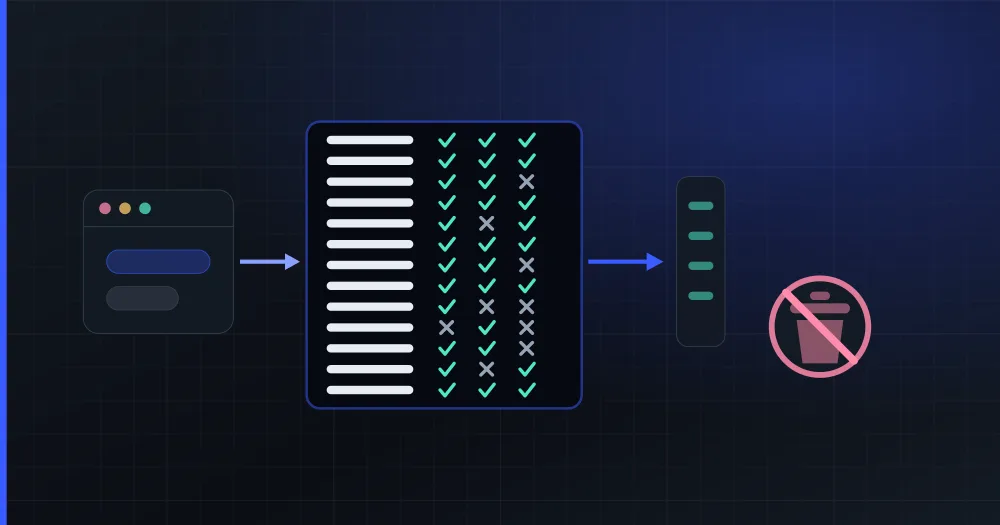
Most comparisons of social media APIs are written for a person clicking buttons. An agent is a different customer: it is fast, it is literal, it does not know what it does not know, and when it gets something wrong it does it at three in the morning on a client's account.
Four things decide whether an API is any good for that, and only one of them shows up on a pricing page.
Everything below verified on September 15, 2026 against each vendor's own documentation.
1. Is it an action server or a documentation server?
This sounds like a distinction nobody could get wrong. It is the single most common way to lose an afternoon.
Ayrshare ships two MCP servers. One searches its API documentation — genuinely useful while you are writing the integration, incapable of publishing. The other, the Action MCP, drives the API with 27 tools across publishing, analytics, history, comments, DMs and profiles. Connect the wrong one and nothing errors: your agent reads docs and your post never goes out.
| Action server | Docs server | Floor to publish | |
|---|---|---|---|
| Ayrshare | Yes, 27 tools | Yes | $149/month |
| Metricool | Yes | No | €0 (its MCP runs on any plan) |
| Buffer | No | No | — no third-party access |
| Postiz | Yes | No | €0 self-hosted |
| PlanVortex | Yes, 28 tools | No | €0 |
PlanVortex has no documentation MCP, and if what you want is an agent that writes your integration correctly, Ayrshare's is a real advantage and it is theirs.
2. Whose accounts are these?
The question that quietly decides everything.
If the accounts are yours — your brands, your agency's clients, connected by hand once — almost anything works, and Metricool's MCP is free on every plan, publishes, schedules, and drives Meta, Google and TikTok Ads on top. That is a strong offer and we do not compete with the ads part at all.
If the accounts belong to your customers, you need onboarding over the API, and this is where most of the field stops:
- Buffer revoked third-party app integrations in 2019 and the restriction still stands. The current GraphQL API is a personal-key beta with no third-party OAuth. There is no supported path, and no amount of workflow wiring invents one.
- Metricool lists managing social network connections as an MCP capability; the connection flow is not something you assemble from API calls.
- Ayrshare does support it properly, through user profiles. The floor to find out whether it fits is $149/month.
- PlanVortex returns a link from
create_connect_linkthat your customer opens to authorize their own account, on your screens, under your brand — on every plan including free.
One thing no API can do, and be suspicious of any that implies otherwise: the agent cannot click authorize. A person has to, on the network's own screen. What a good API lets the agent do is produce the link and then get on with the rest.
3. Blast radius: what can it not do?
Everyone lists what their tools do. For an agent, the more useful list is the other one.
PlanVortex's MCP server has no delete tool. Not for posts, not for accounts, not for contacts, not for comments. An agent that misreads an instruction can publish something you have to retract — a bad afternoon. It cannot empty a client's comment inbox — a different category of bad afternoon. Deletions happen in the panel, by a person.
Two more gates in the same spirit:
create_ai_planis off by default. Generating a week of posts spends AI credits, so it only exists when the server is started withPLANVORTEX_MCP_ALLOW_AI=1. An agent that quietly burns credits is a support ticket.- Publishing and replying speak publicly in someone's brand voice. The documented expectation is that a person sees the draft first. An API cannot enforce that for you, but it can avoid designing it away.
4. Can it ask what each network allows?
This is the one that never appears in a comparison table and causes the most production failures.
The thirteen networks do not agree on anything. Some of the real differences:
- Slack publishes and reports reactions. No comment inbox, no DMs, no impressions or reach anywhere.
- Google Business does not publish at all. It is a listing that receives reviews; it exists for the review inbox.
- Telegram cannot read anything posted before the channel was connected — the Bot API has no history — so its inbox starts on connection day.
- Bluesky has no impressions and no reach, only public counters.
- Instagram, X and Bluesky cannot delete somebody else's comment; LinkedIn has no "hide"; Google Business can only delete your own reply.
An agent that assumes these are all the same writes a reply that cannot be sent, reports a reach figure that does not exist, or reports zero for a metric the network never had — which is worse, because zero looks like data.
PlanVortex publishes two tools for exactly this: get_social_capabilities returns what a network supports, and get_social_limits returns the character counts, media limits and video durations — including the two Bluesky counts in different units, 300 graphemes and 3,000 bytes, because a family emoji is one grapheme and twenty-five bytes and .length lies about both.
The rule behind it is worth stealing whatever you end up using: whoever validates a limit is who gets to announce it. When the composer keeps its own copy of the rules, it drifts from the server that enforces them, and the failure shows up as a post the user was allowed to write and the network refused.
The honest summary
| Best for | Floor | Watch out for | |
|---|---|---|---|
| Metricool | Your own brands, ads included | €0 (MCP) | API needs Advanced; no comment/DM tools in the MCP |
| Ayrshare | Publishing for your users, 14 networks | $149/month | Two MCPs — connect the Action one |
| Buffer | Your own channels, in n8n | Free tier | No third-party access since 2019 |
| Postiz | Running your own infrastructure | €0 self-hosted | You maintain the OAuth apps and rate limits |
| PlanVortex | Publishing for your customers, from a product | €0 | No ads, no Reddit/Pinterest/Snapchat, no n8n node |
There are more of these than there were a year ago — Upload-Post, Blotato, Outstand and bundle.social are all real options with real customers, and any comparison that pretends the market is three vendors is out of date.
Where PlanVortex sits
Thirteen networks, 28 tools, no delete tool, capability discovery, connect links over the API, and all of it on the free plan with no card:
npx -y planvortex-mcp
It authenticates with the client_id and client_secret of an app you create in the dashboard — one app on free, two on basic, five on pro, up to ten on custom — and the same credentials drive the Node library, the Python library and plain HTTP.
What it does not do: advertising, Reddit, Pinterest, Snapchat, and there is no n8n node. For n8n, point the MCP Client node at the command above.
The MCP server is documented at /en/agents and the API at /en/developers.
What is the difference between an action MCP and a documentation MCP?
A documentation MCP searches an API's docs so a coding agent writes the integration correctly. An action MCP calls the API — it publishes, reads and replies. Ayrshare ships both and they are easy to confuse, which is how people end up with an agent that reads documentation while waiting for a post that never goes out. PlanVortex ships an action server only, with 28 tools.
Can an AI agent connect a social account on its own?
Not the authorization itself — that always needs a person clicking authorize on the network's own screen, and any API claiming otherwise is doing something you do not want. What an agent can do is produce the link. In PlanVortex that is create_connect_link, so an agent can run onboarding end to end and hand the customer a link, rather than stopping while somebody wires an account by hand.
What should an agent be prevented from doing?
Deleting. PlanVortex's MCP server has no delete tool of any kind — not for posts, accounts, contacts or comments — and that is a design decision rather than a gap. An agent that misreads an instruction can publish something you have to retract; it cannot erase a client's inbox. Deletions happen in the panel, by a person.
How does an agent know what each network allows?
It has to ask, because the networks genuinely differ: Slack has no comment inbox and no DMs, Google Business does not publish at all, Bluesky has no impressions, Telegram cannot read anything posted before the channel was connected. PlanVortex publishes get_social_capabilities and get_social_limits so a workflow branches on the answer instead of failing at three in the morning with a reply the network was never going to accept.
Which social media API is free for agents?
PlanVortex's API, its apps and its MCP server are on all four plans, the free one included: three connected accounts, unlimited publications, no card. Metricool's MCP is free on any plan but operates over your own brands, and its API needs Advanced. Postiz is open source and free if you self-host it. Ayrshare's action MCP needs a plan from $149/month. Buffer has no third-party access at all.