
Buffer's API in n8n: fine for your channels, closed for your customers'
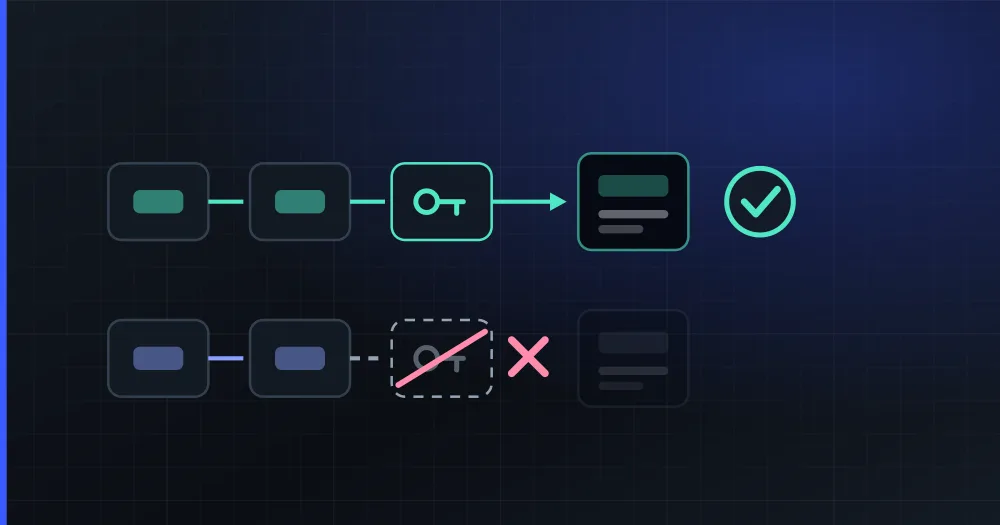
Yes, there is an official Buffer node for n8n, and it works. If you came here to wire your own Buffer account into a workflow, install it, paste a Buffer API key, and you are done. The rest of this page is for the case where that key stops being enough — which happens the first time the channel belongs to someone who is not you.
Verified on September 15, 2026 against Buffer's developer documentation, the node's own repository and PlanVortex's production code.
What the official node does
Buffer maintains it themselves at bufferapp/buffer-n8n.
| Actions | Create an idea, publish a post |
| Networks | X, Instagram, TikTok, YouTube, Facebook, LinkedIn |
| Scheduling | Publish now, add to queue, or schedule for a specific time |
| Media | Images and video |
| Auth | A Buffer API key |
The queue mode is worth calling out, because it is the thing Buffer has always been better at than everyone else: you do not pick a time, you drop a post into a slot pattern you defined once. In an n8n workflow that means you can generate content on a trigger without also having to invent a schedule.
The wall: there is no third-party access
Here is the part that the tutorials leave out.
Buffer closed third-party app integrations in 2019, and that restriction still stands. The old REST API stopped accepting new developer app registrations. The current GraphQL API is a public beta with personal API keys: you request access, generate a key, and publish to your own connected channels. Third-party OAuth — the flow a SaaS needs to onboard an end user and post for them — is not enabled.
So the boundary is clean:
| What you want to do | Buffer + n8n |
|---|---|
| Publish to your company's own channels | ✅ Works today |
| Let your teammates' channels run through the same workflow | ✅ If they are in your Buffer org |
| Let your customer authorize their Instagram and publish for them | ❌ No supported path |
If you are automating your own marketing, none of this matters. If you are building a product where your customers connect their accounts, you will hit this on day one, and no amount of n8n wiring gets around it, because the missing piece is an authorization flow that Buffer does not expose.
What to do instead, and what it actually costs
We do not have an n8n node. We have not built one and it would be easy to imply otherwise on a page like this. There are two routes that work today.
Route 1 — n8n's MCP Client node. Point it at the PlanVortex MCP server:
npx -y planvortex-mcp
The workflow gets all 28 tools: publishing and scheduling, the comment inbox, private messages, stats, account listing and connect links. This is the shorter route if the workflow has an AI step in it anyway.
Route 2 — plain HTTP Request nodes against api.planvortex.com, authenticated with an app's client_id and client_secret. More wiring, more control, and it is what you want if the workflow is deterministic and you would rather not have a model choosing tools.
Either way you need an app, created in the dashboard under Settings → Apps. Every plan has them — one on free, two on basic, five on pro, up to ten on custom — so the whole thing can be built and tested without entering a card.
And for the case Buffer cannot cover: create_connect_link returns a link your customer opens to authorize their own account, on your screens and under your brand. That is the piece the 2019 revocation took away and never gave back.
Thirteen networks, and what that changes in a workflow
The node covers six networks. PlanVortex covers thirteen: Facebook, Instagram, Threads, LinkedIn, TikTok, X, WhatsApp, YouTube, Google Business, Bluesky, Discord, Telegram and Slack.
The three at the end change what an automation is for. Discord and Telegram are communities, Slack is a team channel — so the same workflow that posts a release note to LinkedIn can drop it in the customer Discord and the internal Slack, which is usually three separate integrations.
Two of those carry limits worth knowing before you build: Slack publishes and reports reactions and nothing else — no comment inbox, no DMs — and Google Business does not publish at all, it is there for the review inbox. get_social_capabilities returns exactly what each one allows, so a workflow can branch on it instead of failing at 3 a.m.
What Buffer does better
The node is official and maintained. Ours does not exist. That is a real advantage and it is theirs.
The queue. Nobody has improved on it, and we do not have an equivalent — PlanVortex schedules by timestamp or generates a week with the AI planner, which is a different idea.
The free plan, for a person. Buffer's free tier is generous for someone posting their own things. PlanVortex's free plan is built around integrating, not around one person's channels: three connected accounts, unlimited publications, and the API.
The short version
- Wiring your own Buffer account into n8n: install the official node, generate a personal API key, done.
- Wiring your customers' accounts into anything, through Buffer: not possible. Third-party access closed in 2019, and the beta API is personal keys only.
- PlanVortex has no n8n node — use the MCP Client node with
npx -y planvortex-mcp, or HTTP Request nodes against the API. - Both routes work on the free plan, because the API and apps are on all four.
The API is documented at planvortex.com/en/developers and the MCP server at /en/agents.
Is there an official Buffer node for n8n?
Yes. Buffer publishes it themselves at github.com/bufferapp/buffer-n8n, as a community node. It creates ideas and publishes posts to your connected channels — X, Instagram, TikTok, YouTube, Facebook and LinkedIn — with the three scheduling modes Buffer has always had: publish now, add to the queue, or schedule for a specific time. It attaches images and video. You need a Buffer API key. Verified September 15, 2026.
Can I use Buffer's API to publish for my own customers?
No, and this is the part that is rarely stated plainly. Buffer revoked third-party app integrations in 2019 and that restriction still stands; the new GraphQL API is a public beta with personal API keys and no third-party OAuth. A personal key publishes to the channels connected to that one account. There is no supported path for onboarding your users and publishing on their behalf.
Does PlanVortex have an n8n node?
No. We have not built one, and saying otherwise would waste your afternoon. There are two routes that do work today: point n8n's MCP Client node at npx -y planvortex-mcp, which gives the workflow all 28 tools; or use plain HTTP Request nodes against api.planvortex.com with an app's client_id and client_secret. Both work on the free plan. A native node is on the roadmap and is not shipped.
What do I need to call the PlanVortex API from n8n?
An app. You create one in the dashboard under Settings > Apps and get a client_id and a client_secret. Every plan has apps — one on free, two on basic, five on pro, up to ten on custom — so you can wire the whole workflow without entering a card. Those are the same credentials the MCP server and the Node and Python libraries use.
What does Buffer do better?
Its queue is still the best model anyone has shipped for consistent personal posting, its free plan is genuinely useful, and the n8n node is official and maintained, which ours is not. If the channels are yours, Buffer plus its node is a shorter path than anything here.